
Mountain Laurel Season
I don't mark my year in quarters, or holidays, or calendar dates.
I mark it in blossoms and bloomings, in what I call “micro-seasons.”
And of all these, mountain laurel season is the one I look forward to the most
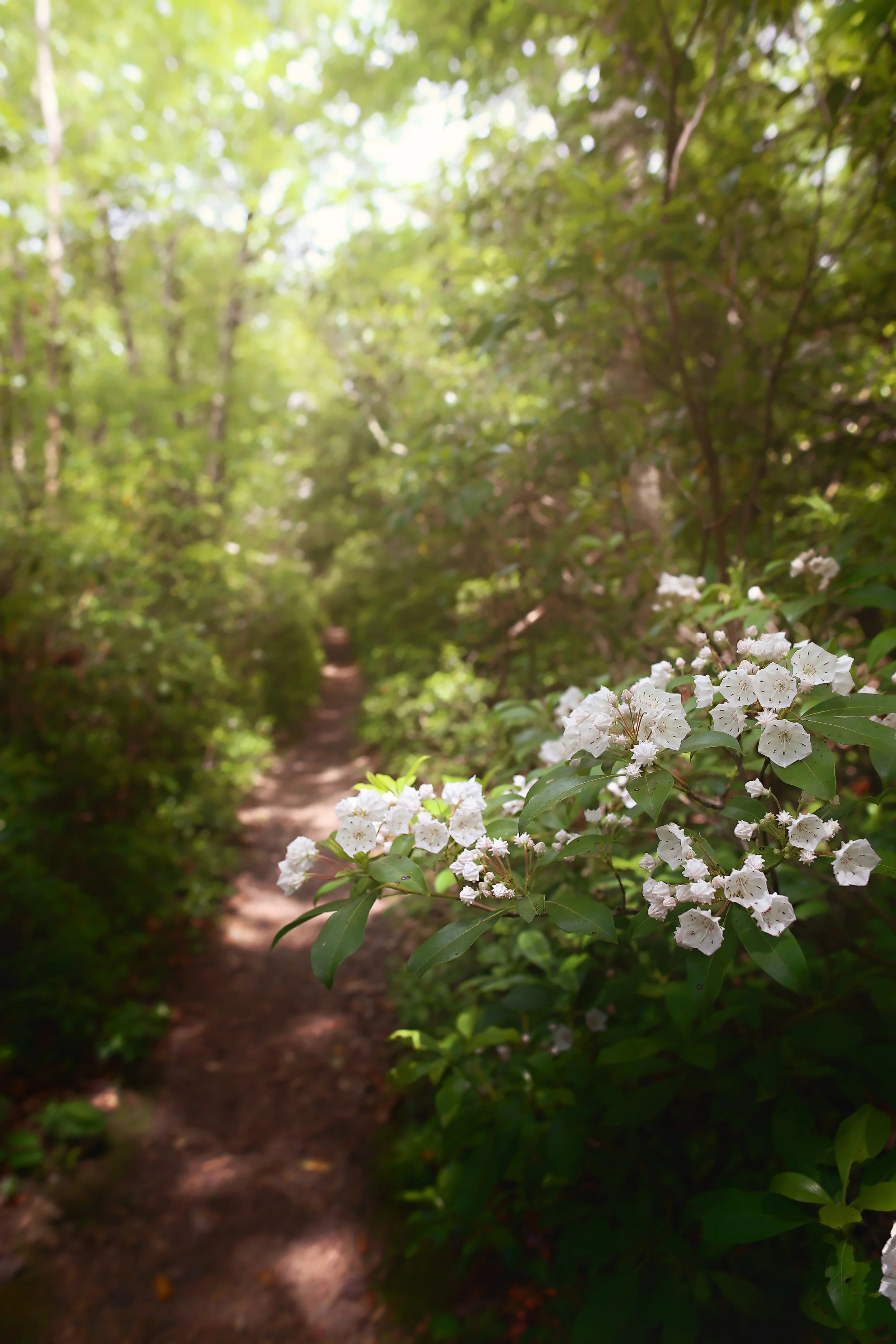
I've passed these same laurels in October when the forest is burning itself down in gold, in January when ice makes them look like something from a fairy tale, in the slow ache of late April when everything is coiling and almost-ready. I know them the way you know something you love: in every weather, every mood, every season of yourself.
And then early June comes, and they open; and something in me opens, too.
I am a mountain girl. My veins run with creek water. These trails know the weight of my sneakers.
So when laurel season arrives, I run toward it. Some years, I only make it once. Other years, I manage a few brief visits. I stand there in the middle of all those pink and white stars, and breathe it in like medicine. There is a very particular scent that emanates from the limestone in the summer; it is tangy and earthy and sweet, mixed wth the sharp green of ferns. If I could bottle it, i would sell it as ‘Summer Afternoon.’
Because here's what marking time by blossoms teaches you: beauty is not only impermanent. It is indifferent . It arrives on its own schedule, indifferent to whether you are ready. The laurel doesn't bloom FOR us. It will not wait until my calendar clears, or the weather cooperates. She just BLOOMS. She blooms loudly and unabashedly. She does not hold back. (I actually wrote a poem about this last year!)
She teaches us so much in her week of splendor. How to dazzle, how to pay attention. How to look at the world as if every breath were a miracle.
She’s here, annually, for such a short time.
And we are lucky enough to be nearby.
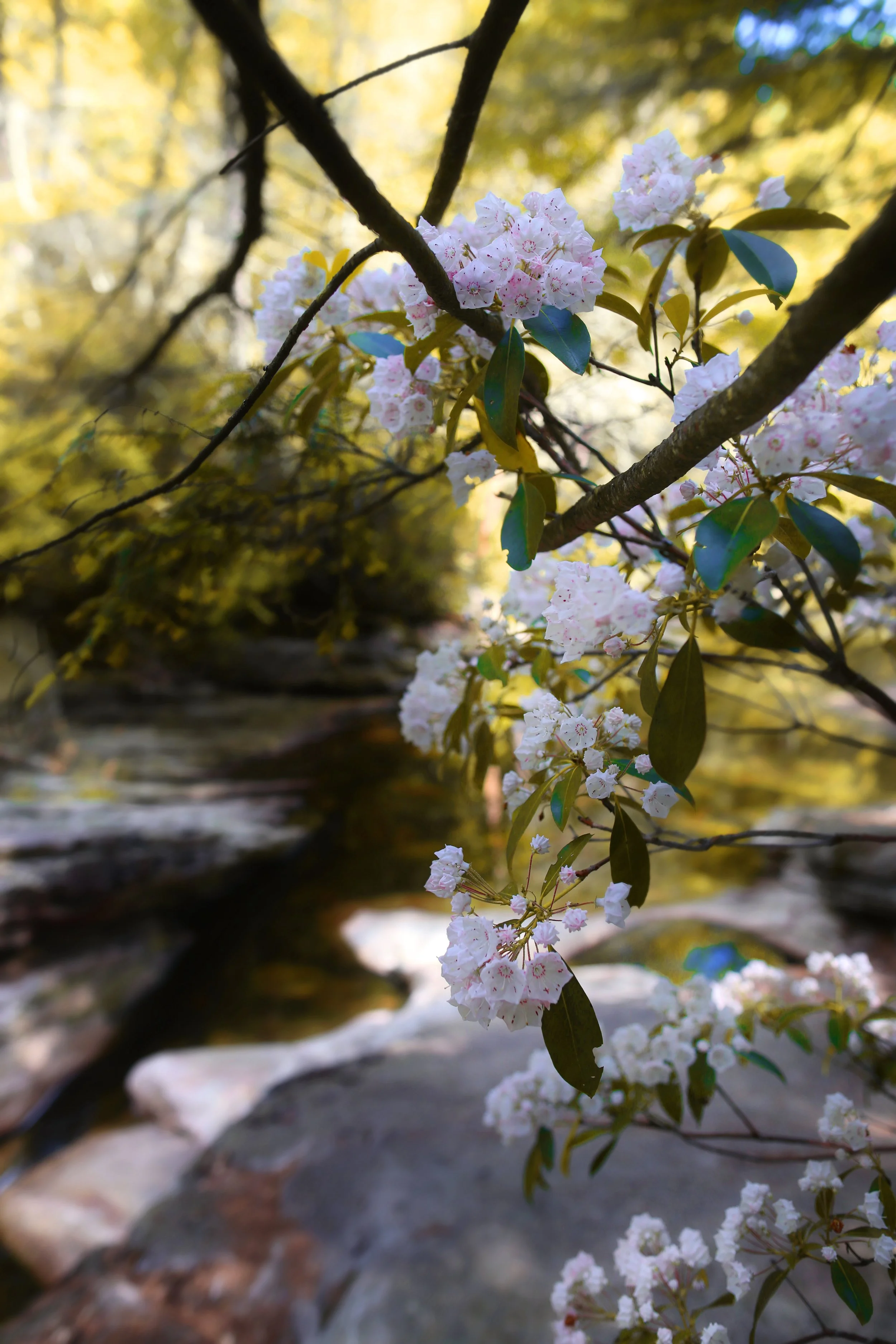
mountain laurel blooming at Peter’s Kill, Minnewaska. State Park Preserve
What is Mountain Laurel?
Mountain laurel (Kalmia latifolia) is a native evergreen shrub that blooms in late spring, typically May through June depending on elevation and weather. It's Pennsylvania's state flower and Connecticut's too! So, it’s not unique to New York. But honestly, the Hudson Valley and Catskills might have the best argument for it. The flowers are remarkable up close: each bud is a tiny geometric marvel, the petals folded into a ten-pointed star before they open into delicate white and pink cups. What most people don't know is that those flowers have a built-in catapult mechanism! How amazing is that?? The stamens are spring-loaded and snap outward to dust visiting bees with pollen. It's been quietly doing that trick for millions of years. The plant itself is toxic to most animals, which is part of why it survives so well! Deer leave it alone, and it just keeps spreading, slow and unbothered, across the rocky hillsides it loves.
Why Does It Grow Here?
Mountain laurel is particular about where it puts down roots, and the Hudson Valley and Catskills happen to check every box. It thrives in acidic, well-drained, rocky soil (the kind that lines our ridgelines and slopes, where the geology is mostly sandstone and shale and the ground doesn't hold water long.) It likes partial shade but tolerates full sun at elevation, which is why you'll find it dense along trail edges and open ledges alike. The Appalachian region is its sweet spot, and we sit right in the middle of that corridor. Essentially, the same conditions that make these mountains feel a little rugged and unforgiving to everything else are exactly what mountain laurel is built for. It's as if the plant were specially designed to thrive in the Shawangunks. How lucky are we?!
Where to See It
The Catskills and Hudson Valley are prime mountain laurel territory, and Minnewaska State Park is ground zero — if you only go one place, go there. Peter's Kill winds along the creek through some of the densest laurel corridors in the park, where the blooms crowd the trail on both sides. Mossy Glen, accessed from the lower lot, earns its name early in the season but by June it's the laurel stealing the show. The Lake Minnewaska Lake Loop gives you laurel and the lake together, which feels almost unfairly beautiful. Jenny Lane Footpath is quieter and less trafficked, which means you often get the blooms almost entirely to yourself. And Stonykill Falls adds a bigger elevation gain, if you like steps! Laurel framing a waterfall is exactly as good as it sounds. (This last hike is trickiest for small children and pets, if you plan on climbing to the top of the waterfall.)
Getting There
Both the Lake Minnewaska and Peter's Kill entrances are accessed through the main Minnewaska State Park Preserve entrance at 5281 Route 44/55 in Kerhonkson. The park opens daily at 9am and parking is $10 per vehicle or you can purchase an Empire State Pass for $80, which gets you access to hundreds of parks. Honestly it’s one of the best deals in the Hudson Valley. (I am not affiliated with NYS in any way!)
The main entrance is first come, first served with no reservation required, but during peak laurel season on weekends it fills up fast, so get there early. An Empire Pass ($80/year) gets you in free and pays for itself quickly if you're up there as often as I am. Dogs are welcome on the trails on a leash (and please use a leash - you will be saving your dog from potential encounters with rattlesnakes, porcupines, and bears!) just not in the picnic or beach areas. For current hours and conditions, check the NYS Parks website or give the visitor center a call before you go.
